
Bulgaria – What You Need to Know

Bulgaria: Important information for tourists and migrants
General information about Bulgaria
The Republic of Bulgaria is a country located in southeastern Europe, in the eastern part of the Balkan Peninsula. It occupies 221 square kilometers of its area. 1,808 kilometers of land borders separate Bulgaria from the Republic of Serbia to the northwest. It borders the Republic of Romania to the north, the Republic of Turkey to the southeast, and the Republic of Greece to the south. It borders the Republic of North Macedonia to the west, and the Black Sea to the east. Its area is 110,994 square kilometers.2, which places Bulgaria in 11th place by area among the EU countries.
Geography of Bulgaria
Bulgaria's topography is varied and uneven. A distinctive feature is the alternation of high and low terrain zones, which run from east to west across the country. Much of the country is made up of the Stara Planina, Pirin, and Rila mountain ranges, including Musala Peak (the highest point on the Balkan Peninsula at 2,925 meters). Bulgaria boasts a Black Sea coastline, plains, mountains, and approximately 540 rivers, including the Danube. Bulgaria has over 400 lakes with a total surface area of 950,000 square meters. Forests, predominantly deciduous, cover approximately one-third of Bulgaria's territory.
Climate of Bulgaria
Bulgaria has a predominantly temperate climate. The barrier effect of the Balkan Mountains strongly influences the climate throughout the country: Northern Bulgaria has cooler temperatures and more precipitation than the southern part. The country straddles both the continental and Mediterranean climate zones. In the lowlands, average January temperatures range from -2 to +2°C, and July temperatures reach up to +25°C. Annual precipitation ranges from 450 mm in the lowlands to 1,300 mm in the mountains. A gentle sea breeze prevents sweltering summer heat.
Population of Bulgaria
The population of Bulgaria is 6,447,710 people according to NSI as of December 31, 2022. 73.7% of the total population lives in cities, with 24.2%, or 1,242,568 people, concentrated in the capital Sofia. Other major cities are Plovdiv (347 851) and Varna (336 216), and also Burgas (201,779), Ruse (141,231), and Stara Zagora (134,726). Bulgarians are the state-forming ethnic group and make up 84.81% of the population. Two minorities, Turks (8.81%) and Roma (4.91%), are relatively more numerous. The remaining 1.51% includes other minorities—Russians, Armenians, Vlachs, Karakachans, Ukrainians, Jews, Romanians, and people who have not identified themselves. The population peaked during the socialist era, when, according to the 1985 census, Bulgaria's population was 8,948,649.
Religion in Bulgaria
According to the Constitution of Bulgaria, there is no official religion; instead, Orthodox Christianity is listed as the country's "traditional religion." According to the 2011 census, 591% of the population identified themselves as Orthodox Christians. The largest minority religion is Islam, declared as the religion of 7.8% of the population (mostly the Turkish minority, but also Muslim Bulgarians and one-fifth of the Roma). Protestantism (0.9%) and Catholicism (0.7%) follow; 0.13% profess other religions. The remaining 311% either indicated they do not profess any religion or did not answer the question.
Language in Bulgaria
The alphabet is Cyrillic. Bulgarian is the earliest written documented Slavic language. Bulgarian is the only official language in the country and is the native language of 85.2% of the population. Turkish is the native language of 9.1%, and Romani is the native language of 4.2%.
Religion
According to the Constitution of Bulgaria, there is no official religion; instead, Orthodox Christianity is listed as the country's "traditional religion." 591% of the population identified themselves as Orthodox Christians in the 2011 census. The largest minority religion is Islam, declared as the religion of 7.8% of the population (mostly the Turkish minority, but also Muslim Bulgarians). One-fifth are Roma, with 7.4% being Sunnis, 0.4% Shiites, and others. Protestantism (0.9%) and Catholicism (0.7%) follow other religions. 0.13% profess other religions, and the remaining 311% either indicated they do not profess any religion or did not answer the question.
Political system in Bulgaria
According to the 1991 Constitution, Bulgaria is a parliamentary republic with a clear separation of powers—legislative, executive, and judicial. The head of state is the president, and the permanent legislative body is the parliament—the People's Assembly.
National symbols of Bulgaria
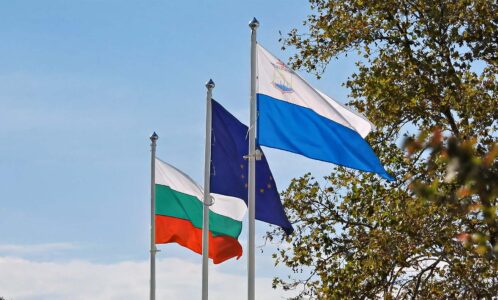
The national symbols of the Bulgarian state are the flag, anthem, coat of arms, and the Guard of the Republic. The national flag of Bulgaria is rectangular and consists of three colors: white, green, and red, arranged horizontally from top to bottom. The colored fields are identical in shape and size.
«"Mila Rodino" became the national anthem of Bulgaria in 1964. The music and lyrics are based on the song "Gorda Stara Planina".
The coat of arms of Bulgaria is an upright golden crowned lion on a dark red field, facing right, resting on a shield. On both sides are lions supporting the shield, and above it is the royal crown. Below the shield is a pedestal of oak branches bearing golden berries and a tricolor ribbon with the national motto "Union Makes Strength.".
History of Bulgaria
Bulgaria has a very ancient and exceptionally rich history. This small country, located on the threshold of Europe and Asia, has seen the influence of virtually all the great ancient cultures. The Thracians, Greeks, Romans, Byzantines, and the Ottoman Empire—all have visited Bulgarian soil, leaving behind countless monuments—tombs, fortresses, temples, mosques—and works of art.
The ancient Bulgarians. The founders of modern Bulgaria, which adopted and preserved their name through the centuries, are the Bulgarians. The history of the Bulgarians can be written from ancient times (1st millennium BC).
They belong to the Caucasian (white) race, part of the larger Indo-European family. Their ancestral home is Central Asia (the Pamir and Hindu Kush region). Being a highly organized social formation, the ancient Bulgarians long remained a defining cultural factor in the Central Asian territories, possessing a high level of knowledge for their time in the fields of philosophical perception of the world, state administration, social structure, military art, writing, language, and civil engineering.
An important product of ancient Bulgarian knowledge is the astronomically perfect cyclical solar calendar, whose constellations are named after animals. UNESCO has recognized the ancient Bulgarian calendar as one of the most accurate in the world.
Culture and Traditions of Bulgaria
The cultural heritage of the Bulgarian lands is rich and diverse. Since prehistoric times, they have preserved traces of various eras with rich traditions. Bulgaria's geographic location at a crossroads explains the interweaving, mixing, and mutual influence of the cultures, customs, and religions of the tribes and peoples who lived and roamed these lands.
The priceless cultural and historical legacy of the ancient Thracians, Greeks, Romans, and entire generations of Bulgarians, whose achievements have left us interesting and useful information about their way of life, traditions, and spiritual insights, is invaluable.
Among the most valuable assets discovered in Bulgarian lands is the cultural legacy of the Thracians, who created incredible artistic and architectural masterpieces. Thracian art, which underwent a long and complex development, bequeathed to us remarkable treasures, tombs, temples, sanctuaries, and cities.
What you should know about the country
Bulgarians are friendly, welcoming, and hospitable. Furthermore, the similarity of language and religion between Bulgarians and Russians helps them understand each other better.
Developed tourism
The main advantages of Bulgarian tourism are: picturesque and diverse nature, safety, a healthy climate, a rich cultural and historical heritage, carefully preserved traditions, customs and folklore, and a hospitable population.
The most famous seaside resorts
These are the resorts of Albena, Golden Sands, Sunny Beach.
The Bulgarian oil-bearing rose, grown in the Valley of Roses, is world-famous. It is one of the country's symbols. It is used to make cosmetics, perfumes, rose jam, rose liqueur, and rose honey.
Major holidays in Bulgaria
| January 1st | New Year | |
| March 3 | Day of Liberation of Bulgaria from Ottoman Rule | National Day |
| April - May | Easter | |
| May 1st | Labor Day and International Workers' Solidarity | |
| May 6 | St. George's Day, Day of Courage and the Holiday of the Bulgarian Army | |
| May 24 | Day of the Holy Brothers Cyril and Methodius, Bulgarian Literature, Education and Culture, and Slavic Literature | |
| September 6 | Bulgarian Unification Day | |
| September 22 | Bulgarian Independence Day | |
| November 1 | Day of People's Awakeners (Day of the Leaders of the Renaissance) | A day off in all educational institutions |
| December 24 | Christmas Eve | |
| December 25 and 26 | Christmas |
Currency in Bulgaria
The lev (abbreviated: lv) is the currency of Bulgaria, issued by the Bulgarian National Bank. One lev is divided into 100 stotinki. The Bulgarian lev is pegged to the euro at a rate of 1.95583 leva per 1 euro. Banknotes in circulation have denominations of 5, 10, 20, 50, and 100 leva.
Currency exchange is available at banks or exchange offices. Banks are open Monday through Friday from 8:30 AM to 5:00 PM. It is advisable to bring an identification document.
Customs restrictions
Cash in the amount of up to 10,000 euros is not subject to written declaration to customs authorities upon import, and arriving passengers can pass through the “Green Channel”, which means that the person does not have anything to declare.
When there are imported funds in the amount of 10,000 euros or more, the person must declare in writing in the Declaration of funds their total value in euros, their origin and destination, the route of transportation, the vehicle on which they will be transported, and must pass through the «Red Channel».
The import and export of precious stones and precious metals by local and foreign individuals is regulated by the Minister of Finance and occurs freely, in the following amounts:
– gold and platinum in unprocessed and semi-processed form – up to 37 grams;
– jewelry and accessories made of gold and platinum – up to 60 grams
– silver in unprocessed and semi-processed form, as well as jewelry – up to 300 grams.
Each passenger over 17 years of age may import:
a) tobacco products:
“200 cigarettes, or 100 cigarillos (cigars with a maximum weight of 3 grams each), or 50 cigars, or 250 grams of pipe tobacco;
b) alcohol and alcoholic beverages:
«"Distilled and alcoholic beverages with an alcohol content higher than 22% of undenatured ethyl alcohol with an alcohol content of 80% or more - 1 liter, or "distilled and alcoholic beverages and aperitifs on a wine or alcohol basis, taffy, sake or other similar beverages with an alcohol content not exceeding 22%, sparkling wines, liqueur wines - 2 liters or "still wines - 2 liters;
c) perfume – 50 grams, and eau de toilette – 0.25 liters;
d) medicines – in quantities that meet the needs of the passenger.
Air transport in Bulgaria
Bulgaria has four international airports: Sofia (SOF), Burgas (BOJ), Varna (VAR), and Plovdiv (PDV). Tourists and travelers often use the airports in Bucharest and Istanbul due to their proximity.
Important phone numbers in Bulgaria
The single European emergency number is 112
Ambulance - 112
Police - 112
Fire Department - 112
Roadside assistance - 112
Interesting facts about Bulgaria
Did you know that in terms of the number of sites protected by UNESCO, Bulgaria ranks 3rd in Europe, behind only Greece and Italy.
Administratively, the Bulgarian territory of the country is divided into 28 regions, which in turn can be divided into municipalities.
Did you know that Bulgaria offers excellent skiing at modern ski resorts: Bansko, Pamporovo, Borovets, Chepelare, Semkovo, Panichishte, Malyovitsa, and, near Sofia, Vitosha. Bulgaria's ski resorts are popular because they frequently open new slopes with updated lift equipment.
Bulgaria on the map
Photos of Bulgaria
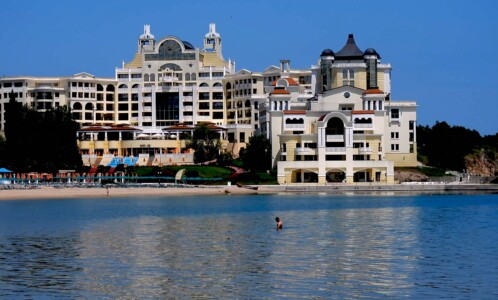
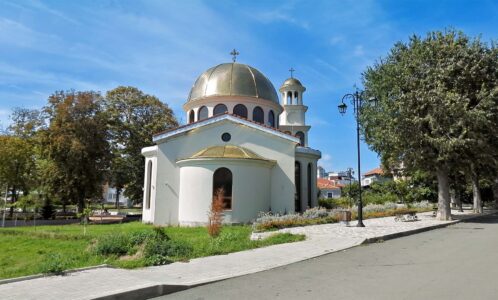
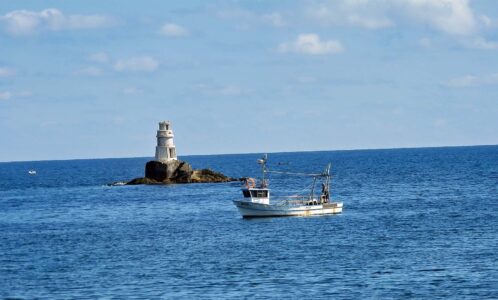
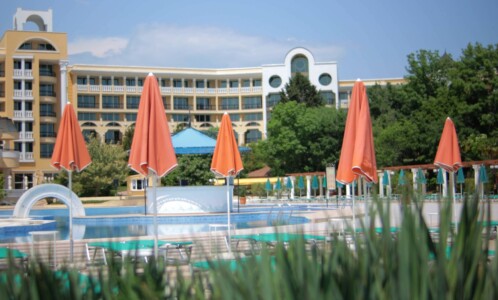
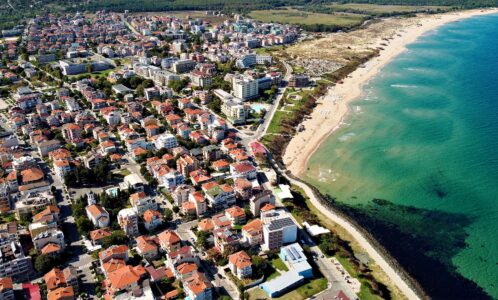
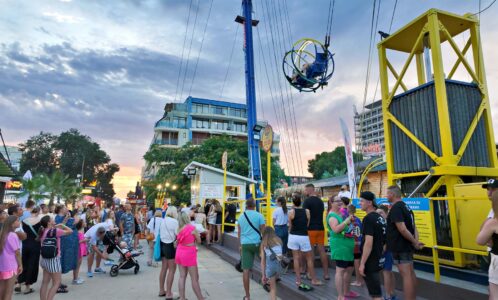
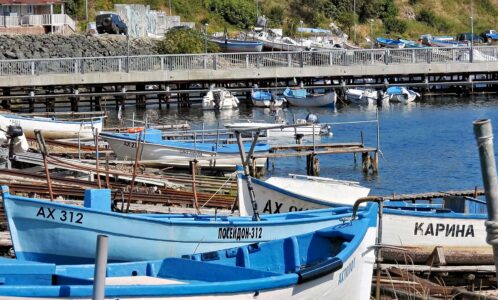
Incidentally, in Bulgaria, you can not only relax by the sea or ski in the mountains, but also improve your health at Bulgaria's balneological resorts. Natural mineral water and mud, as well as clean air and a mild climate, are excellent treatment options at resorts such as Velingrad, Sandanski, Hisarya, Bankya, Pavel Banya, Kyustendil, Devin, and Sapareva Banya.
- Pomorie 2026 from a Drone: Beaches, Downtown, and Fishing Harbor from Above (4K)
- Sveti Vlas 2026 from a Drone: Marina Dinevi, Luxury Yachts, and Beaches (4K)
- Sunny Beach 2026: Prices, Street Food, and a Stroll Along Tsvetna Street (4K)
- Moving to small towns in Bulgaria: How to get 6 times the average salary from the government
- The Bonus-Malus system is officially in effect: the end of the era of flat car insurance prices.
Bulgaria's Seaside Resorts on the Map Winter Resorts in Bulgaria on the Map SPA Resorts in Bulgaria on the Map All of Bulgaria's Beaches on a Map Nearest Airports in Bulgaria on the Map Sunny Beach Photos Sunny Beach — What to See? Sunny Beach Map
 Русский
  English
  Български
  Deutsch
  Română
  Українська
  Polski