

Sofia, Bulgaria – A City to Live in: All About Life in the Capital
| Is it good to live in Sofia? Some call Sofia a "provincial capital." And Sofia's coat of arms reads, "Growing, but not aging." Indeed, the age of the Bulgarian capital isn't immediately apparent. But only when you look closely does it become apparent. Sofia is the largest city by population in Bulgaria, it has a population of 1,383,435 people. Location Sofia is located in western Bulgaria and surrounded by five mountains. The city center rises to over 500 meters above sea level, while the outskirts of the capital are even higher, reaching 600-800 meters. Sofia is administratively divided into 24 districts, or communities as they are called locally. The largest district is Lyulin. It is so large that it has its own city center. | Photos of Sofia |
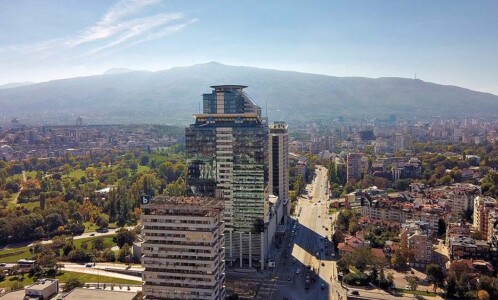
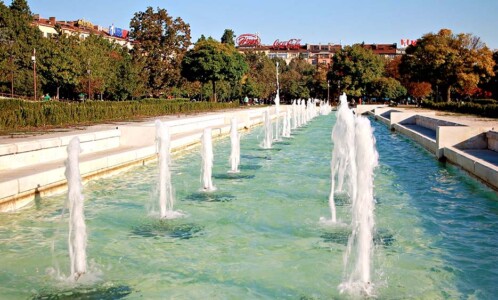
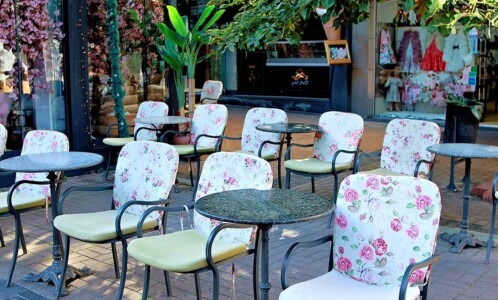
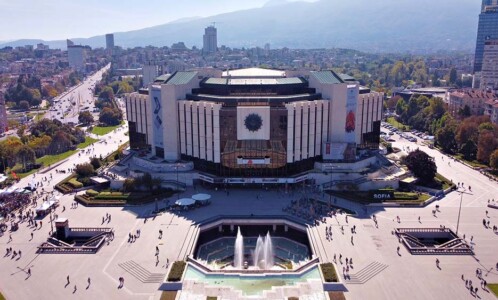

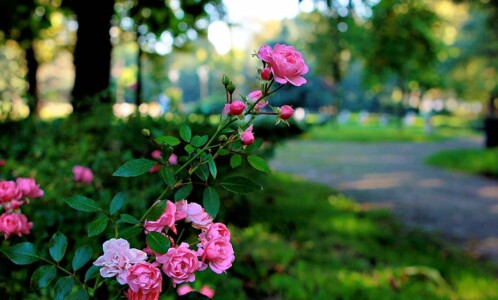
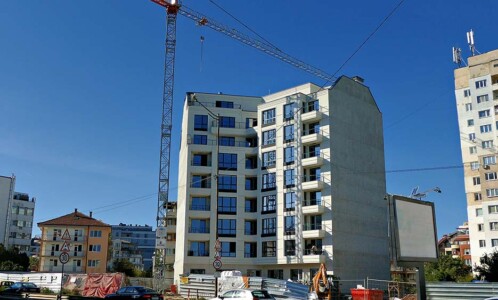
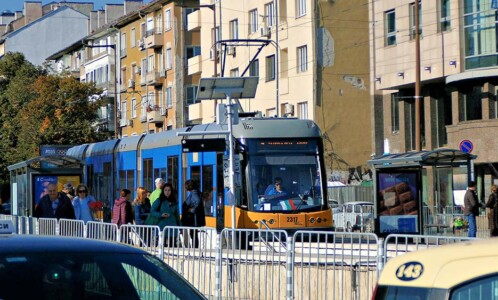
The Aegean Sea in Greece is a three-hour drive from Sofia. The Black Sea, 380 km away, is a four-hour drive along the Trakia Highway.
Climate
Sofia's climate is characterized as humid continental. The warmest month in Sofia is July, with an average temperature of 21.2 degrees Celsius. Although the city is surrounded by mountains, it is exposed to cold northern winds from the northeast. Therefore, winters here are much harsher than on the coast. On the coldest winter days, temperatures can drop to -15 degrees Celsius or even lower, especially in January.
There's also a significant daily temperature fluctuation. When we arrived, it was +5°C in the morning, but the daytime temperature rose to +26°C. Summer in the capital is slightly cooler than in the rest of the country due to its higher altitude.
Transportation
You can reach Bulgaria's capital, Sofia, by any means of transport, including by plane. Sofia Airport has connections to more countries and cities than any other airport in Bulgaria. Airport entry costs start at 2 euros.
You can, of course, get there by train. There's a train station. By bus. There are several bus stations in Sofia that handle buses from many countries. Buy the cheapest bus tickets. You can do it here.
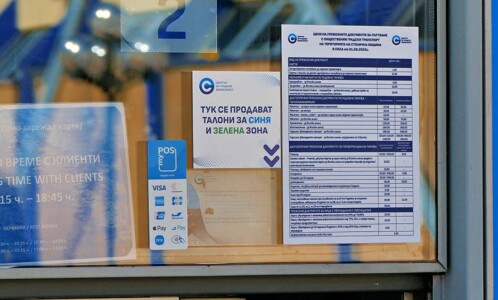
Sofia has a well-developed public transportation system, including buses, trolleybuses, trams, and the metro. A standard city ticket for any mode of transportation costs 0.80 cents per ride. A day pass for all ground transportation routes is also available for €2. A monthly metro pass costs €18 for a personalized ticket and €21.50 for a standard ticket. A monthly pass for all modes of transportation costs €25 for a personalized ticket and €35 for a standard ticket.
The city is divided into parking zones. Parking in the blue zone costs €1 per hour and is permitted for a maximum of two hours. Parking in the green zone costs €0.50 per hour for up to four hours. Payment can be made via SMS or the Urbo app.
Housing
Sofia hotels on the map:
What about housing in Sofia? New housing is being built in Sofia.
Rental prices for a one-room apartment start from 200 euros.

And for 215 euros per month we found this option.
Rental prices for a two-room apartment start from 230 euros.

And for 245 euros per month we found this option.
I'd like to point out that these prices are for long-term rentals. In Bulgaria, a long-term rental is defined as a lease agreement of one year or more. If the rental is terminated early, before six months, the landlord retains the deposit.

Apartment prices start from 40 thousand euros.

A one-room apartment like this can be purchased for 46,900 euros,

And this two-room apartment costs 63,750 euros.
But it's not fully equipped; it's simply a box. Also, keep in mind that Sofia is a large city, and conditions and infrastructure vary greatly from district to district. Therefore, we don't recommend buying an apartment without living in the area for a while.
Economy. Salaries and Standard of Living
According to the most recent data, the average monthly salary is 2,298 leva before taxes and fees. For comparison, Varna it is 1514 leva, and in Burgas 1343 leva. The unemployment rate in Sofia is 3.31 TP3T, in Varna 4.11 TP3T, and in Burgas 4.81 TP3T.
Crime
The crime rate per 1,000 people in Sofia in 2020 was 1.7. For comparison, in Varna it was 2.5, and in Burgas it was 2.5.
Medicine
According to the latest data, the number of people per doctor in medical institutions in Sofia is 180 people, in Varna 196 people, in Burgas 300 people.
Infrastructure
Municipal expenses per capita in Sofia are 1,020 leva. In Varna, these expenses are 1,062 leva, and in Burgas, 1,021 leva. The price of water is 2.93 leva per cubic meter: 4.54 leva in Varna and 4.39 leva in Burgas.
I'll add another point to what's already been said. The city municipality has installed dog feeders. They can be found in parks and squares. To dispense food, insert a water bottle into a special hole. This feeder is designed for two dogs at a time.
Public toilets with self-cleaning systems have also recently been installed throughout the city. However, they are still very few in number.
Education
Sofia is home to 22 universities, both public and private. There are also colleges, high schools, schools, and kindergartens. There are also 13 specialized schools for children with special needs.
Culture and attractions
Sofia offers a vast array of cultural attractions, historic buildings, theaters, and numerous museums. Many of these are listed among the top 100 national tourist sites. The National Palace of Culture (NPC) is located in the center of Sofia. It was built in the modernist style, or more precisely, in the brutalist style—an architectural movement from the 1950s to the 1970s that originally emerged in English architecture. One of the city's main landmarks is the 19th-century St. Alexander Nevsky Cathedral.
A popular place to stroll in Sofia is the Central Pedestrian Street on Vitosha Boulevard. It's a very pleasant place for leisurely strolls. The cafes along the pedestrian street are located outdoors, and the lampposts, benches, and kiosks have recently been updated in an elegant Art Nouveau style.
The two oldest and most famous bridges in Sofia are the Eagle's Bridge and the Lion's Bridge. The Lion's Bridge is located near the city center over the Vladaiska River. The largest park in Sofia is Borisova Gradina, formerly known as Freedom Park. Of course, these aren't even the 10% attractions in Sofia. That's a topic for a separate video. For shopping enthusiasts, Sofia has shopping malls. The most popular are: Serdika Center, The Mall, Sofia Ring Mall, Mall of Sofia, and Bulgaria Mall.
Unlike other cities in Bulgaria, I was surprised to find that parking in some shopping centers is paid for stays of more than two hours.
Pros of Sofia
- The mountain view is amazing! Waking up in the morning and seeing the mountains from your window.
- Sofia Airport offers a wider choice of flight destinations.
- The city's convenient location, for example, close to the Greek sea coast.
- Compared to Varna, the tap water is less hard, and there's almost no limescale in the kettle. Locals say the water is safe to drink without boiling, but we haven't tried it.
- The streets are cleaner than in Varna, for example.
- There is a wide choice of accommodation.
- There are attractions and entertainment both in the center and in the surrounding areas.
- The main advantage is the maximum number of opportunities and one of the highest average salaries in Bulgaria.
- The capital is suitable for people who love cultural events, exhibitions, and festivals.
- Almost all chain stores are present in the city, so prices for goods are low.
- There is 5G coverage in the city.
Cons of Sofia
- There is a high probability of an earthquake, as the last major earthquake was in 2012.
- Winters are harsher, continental and colder compared to Varna and Burgas, where even snow cover is rare and short-lived.
- There are traffic jams compared to Varna and Burgas.
- More time is spent on traveling to work, school, etc. due to long distances.
- Large daily fluctuations in air temperature.
- There's a serious air pollution problem. One of the reasons is its location in the Sofia Valley, surrounded by mountains on all sides, which reduces the atmosphere's ability to purify itself. The capital's air is primarily polluted by fine dust particles and nitrogen oxides. And if you add in the winter heating with wood and coal...
Conclusions
Sofia is a city with the greatest opportunities, primarily for earning money and careers, but the cost of living is also higher. The city has a fast pace of life. Of course, it has its own atmosphere and character. But for those who value the environment and fresh air and already have an income, living in the city will be uncomfortable and not particularly worthwhile. I hope this article was helpful; please share your thoughts and questions in the comments.
Weather in Sofia today
SOFIA WEATHERVideo version of the article:


 Русский
  English
  Български
  Deutsch
  Română
  Українська
  Polski