

- Life of our people in Bulgaria
- Life in Bulgaria through the eyes of emigrants
- Adaptation in Bulgaria
Is Bulgaria Worth Moving to? Real-Life Experiences
A legend about Bulgaria tells how, when God was distributing land among the nations, the Bulgarians were working in the fields and were the last to claim their land. But the Lord had already distributed everything. He wondered what to give them, since he had nothing left. Since the Bulgarians were known for their kindness and hard work, God decided to give them part of his land—paradise. And indeed, Bulgaria is famous for its beauty and many amazing sights. A country with an incredible history.
But is life here really better than at home? This question will be answered by the heroes of this article, who have come to Bulgaria. They explore life in Bulgaria, how our people live here, stories of their move, and what real Bulgaria is like.

Meet Alexander (A) and Maria (M). They moved to Bulgaria from Kazakhstan five years ago. In Kazakhstan, they had a successful event planning business.

Natalia (N) will also tell us about life in Bulgaria. She's a retiree. She moved to Bulgaria from Kazakhstan six years ago. We met at Cape Kaliakra.
And buy the cheapest bus tickets You can do it here.
S: What did you do in Kazakhstan before moving?
A: Before we moved, we had a business related to events. We organized weddings, birthdays. I was in charge of the technical side, and Maria was in charge of the floristry and flowers. It was very interesting. But besides that, Maria worked in aviation for nine years, in ground handling. She checked in passengers, handled their luggage, and so on. I also worked as a professional DJ for about 20 years.
S: Why did you leave?
M: In 2006, I visited Europe for the first time and fell in love with it. Even then, I knew I wanted to move from Kazakhstan to be closer to Europe. And we chose Bulgaria.
S: What did you do in Kazakhstan before moving?
N: I worked at a machine-building plant. Then I retired. And then I came here. I worked as a manager, what they call a mid-level manager. From foreman to shop manager and back. In a sine wave.
C: Why did you decide to move?
N: My brother and his family lived here. I came to visit them. So, in two days, the whole issue was resolved. I bought an apartment in a building under construction here in two days. And then I had to move.
Which city in Bulgaria did the interviewees choose?
C: Which city in Bulgaria did you choose and why?
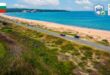
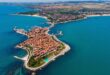
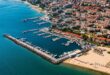
M: We originally planned to move to Sofia. But since we had friends living in Varna, and they still do, we came to Varna for six months to acclimate. We wanted to have a good time here. We arrived here in March and wanted to adapt, get our documents, and then move to Sofia. And Varna welcomed us with open arms, so to speak. And thanks to the people we met here who supported us in the first few months, we realized there was no point in going to Sofia. Because we already had a social circle here.
We also realized we wouldn't trade the sea for anything. Initially, we didn't understand the beauty of living by the sea. But after living here for the spring and summer, we realized that the best city in Bulgaria to live in is Varna. Absolutely.
S: Natalia, which city in Bulgaria did you choose and why?
N: I didn't choose the city. My brother and his family just lived here, so Varna turned out to be the best choice. I've traveled around Bulgaria. I've been to different cities, and in my opinion, Varna is a wonderful place.
About Cape Kaliakra
S: What can you tell us about this place?

N: Kaliakra? But it's a divine place. There's some kind of energy here, or something. Well, I read a little about this place. It was inhabited as early as the fourth century BC. So, the Thracians were here, and the Romans were here, and the Turks were here. Incidentally, it was the last to surrender to the Turks. This was a fairly densely populated area, judging by the excavations, you can see that. And there's some kind of energy here; I really like it. It has energy. And not only is it beautiful. Then there's the fact that it's a national park. They say you can see dolphins and cormorants here.
S: How many years did you live in Varna?
M: Exactly five and a half years.
N: I lived in Varna for 6 years this year.
S: Can you tell us a little about Varna?.
A: In my opinion, Varna is the most beautiful city on the Bulgarian Black Sea coast. And I feel the soul of this city. I already know all its streets. And I think I love this city.
M: But I'd like to add that Varna is like a pair of worn-out slippers—that's what people call it. Why? Because it's very comfortable to live in. It's located in such a way that you're both in the center and out of town, and you can get to any point in Varna in 15 minutes. So, for children, adults, entertainment, and education, everything is right in the center. It's a small, cozy town.
S: What did you know about Bulgaria before coming here?
A: I knew nothing, I trusted my wife, and I was right. I knew that Bulgaria was called the 16th republic of the Soviet Union. I knew there was a sea here, that it was warm. And I basically knew that Bulgarians treat Russian-speaking people very well. And that's really true.
S: Can you tell us a little about Varna?
N: Varna is also a very old city. It seems the first mention of it dates back to the 6th century BC. It was first settled by the Greeks; there was a Greek colony called Odessos. Then the Byzantines came here, as did the Russians and the Ottoman Empire. The city has a very rich history. There are some historical museums. The city is considered a cultural center. It's the third most populous city in Bulgaria. Some kind of special people live here. From what I've heard, some kind of Bulgarian ethnic group lives here.
S: What did you know about Bulgaria before moving here?
N: Almost nothing, except for what we were told during the Soviet era. I knew nothing. It's a country on the Balkan Peninsula. Small, with beautiful nature and good resorts. Because those Soviet people who could (could afford it) went there for vacation.
The story of Alexander and Maria's move
S: How did Bulgaria welcome you?
A: We arrived in the spring. It was still cold. We weren't sure what the weather would be like here. How it would be, but then, as time went on, everything started to bloom and it got warmer. We really love summer, we love swimming, and even now, at the end of October, we were at the sea today, swimming, the weather was wonderful.
M: I can add that Bulgaria welcomed us very well on behalf of its people. Because when we took our child, our eldest daughter, to school in the first few days, she was accepted and given new textbooks, and we saw that people were happy to see us. We started to process the paperwork to officially reside here. We encountered no resistance. And based on this, I can conclude that Bulgaria welcomed us very well.
What difficulties did you encounter when you moved here?
M: The first challenge is seasonality. Considering we're professional event planners, and events here mostly happen in the summer. The first biggest challenge was in the fall of 2016. Once we got through the spring and summer and had a good season, we had projects in place and had already started working on organizing events and parties. The first challenge was that the tourists left and the financial inflow decreased. That was the first one.
C: How much money did you bring to Bulgaria?
A: Ten thousand. Ten thousand euros.
The story of Natalia's move
S: How did Bulgaria welcome you?
N: It was fine. I was greeted very warmly; at least, I liked Bulgaria right away. Because the people here are very friendly. It's true that I came here for the first time on vacation, and that was January 2014. Then everything was covered in ice. Compared to Karaganda, where I'm from. Of course, it was very beautiful, because all the leaves were covered in ice. And I was still worried, wondering if these trees would survive? If they would still be alive in the spring. No, I arrived and everything was alive and well. It was wonderful; Bulgaria gave me a good welcome. If it had been bad, I wouldn't have come.
C: What difficulties did you encounter when you arrived?
N: Well, basically, I'm a pensioner, so that's why I moved here. I didn't have any problems with work, but of course there were financial issues. I bought an apartment in a building under construction. The building wasn't finished. So I had to live in a rented apartment for about four months. I had to pay extra for it; at one point, I didn't have enough money. But then everything worked out, thank God. I bought the apartment for about 33,000 euros in total.
C: How much money did you bring to Bulgaria?
N: I arrived, so it's probably around 35-36, maybe. The initial cost was 40,000 because I was installing the furniture and everything. I needed about 40,000 euros.
Mistakes of immigrants
C: What shouldn't you do in Bulgaria?
A: Upon arrival, relax and spend a lot of money.
M: Yes, relaxing and spending a lot of money. That's what we did. We arrived and happily started spending all our money. Driving along the entire coast, exploring in a relaxed manner. So, first of all, don't spend all your money and don't relax. I agree.
S: Which city do you think is best for living? If so, would you have chosen another city?
A: Plovdiv maybe? But there's no sea there.
M: I wouldn't trade Varna. We really like Plovdiv too. If I had to choose a city, Plovdiv would be first after Varna.
S: What shouldn’t you do in Bulgaria upon arrival?
N: No need to rush. There's no need to rush. That's because I came here and urgently needed to buy some appliances. Now I really regret buying them. What I bought wasn't the best, even though the prices seemed reasonable. Anyway, I realized there's no need to rush, just look around. There's a huge selection here, including housing, appliances, and furniture. Take your time, and everything will fall into place.
S: Which city do you think would be the best if you had the opportunity?
N: Varna is better for living. I wouldn't change it now. Although I like everything here. I've been to many cities in Bulgaria, and I like them all: Plovdiv, Veliko Tarnovo, Sofia, the smaller towns there, Burgas, Nessebar. But I probably wouldn't change Varna.
S: Did you have any kind of plan for your family for 1 year?
A: We had a business in Kazakhstan that was generating income, so our main goal was to establish online and remote operations in Kazakhstan and develop what we call a branch of our company here. We successfully accomplished this.
About the Bulgarian language
C: Did you know Bulgarian before moving?
A: That's an interesting question. After we completed all the paperwork, we had to learn a little bit of the language. I even burned a CD in the car and listened to it; I drove around a lot. Some words, of course, stuck with me, but once we arrived here, we had to take lessons. And they really helped us later on.
S: How did you adapt to the Bulgarian language?
M: I think it was all very easy and straightforward. We hired a tutor. Three months of intensive Bulgarian lessons. This allowed us to start communicating literally within the first few months. And since Varna is a Russian-speaking city, many Bulgarians speak Russian here. We didn't experience any harassment or problems.
S: How are things with your Bulgarian now?
M: Now everything is really great. We communicate, maybe with an accent. No, we speak with an accent, but our Bulgarian is enough to communicate, write, listen, and even watch movies. We communicate with Bulgarians every day, especially on technical topics. And we understand each other very well. And they understand us. Let's say we don't feel pressured in this regard. They always accommodate us, even without correcting us. They wait until we say it correctly ourselves.
Moreover, Bulgarians are touched when they hear that the Russian-speaking population speaks Bulgarian, and they really like it. By the way, they never correct me or judge me. This gives me such a desire to learn the language, and they offer support. And you don't feel somehow inferior. You start speaking more and more.
S: Did you know Bulgarian upon arrival?
N: No, of course not, I didn't know a single word, even the simplest ones. And it seemed very easy at first. It's very similar.
S: How did you adapt to the language?
N: Oddly enough, it's very good. Because people my age, Bulgarians, almost all of them speak Russian. That's why when I started saying something in Bulgarian, they'd say, "Don't bother, speak Russian better." And they did. I even sometimes blamed them, saying that it's because you speak Russian that I can't learn Bulgarian.
S: How are things with your Bulgarian now?
N: Well, unfortunately, not very well. Because I have very little contact with them. Because that's the kind of person I am, an introvert, always keeping to myself. So it's not very good, but I'm trying, learning little by little. Of course, I can explain myself in public places. And I understand better than I speak.
What advice would you give to people who have moved to Bulgaria? Is it necessary to learn the language?
N: Absolutely! Actually, even if you're living in your own environment. The language of the country you live in is a big mistake for those of us who live in the former Soviet republics. For example, I came from Kazakhstan. Almost no one here speaks Kazakh, no one. It's a matter of principle. I think that's disgusting. Of course, you absolutely have to know the language of the country you live in.
How much money do you need to live comfortably in Bulgaria?
C: How much money do you need per month to live comfortably here?
M: I think 4,000 euros is a good amount for a family of four to live comfortably. You can pay all the bills, pay taxes, fill up the car, travel around Bulgaria, and basically have everything you need.
C: Is it possible to open your own business or find a job here? If so, is it difficult?
M: It's very easy to start your own business and find a job. The main thing is desire.
N: Well, I can only speak for myself, that's my opinion. I'm a pensioner. I don't need much, of course, I can't compare to young people. Well, I keep track of my expenses because, frankly, my pension isn't great. Normal means 600 leva. I can easily fit into 600 leva. 600 leva isn't enough to save too much, and ideally, 800 leva would probably be luxurious. So when people come here from Western Europe, I think they have a great time.
S: What do you do in Bulgaria in terms of income generation?
M: I currently operate online; for a long time, I worked offline. We hosted parties and events. I worked as a decorator and florist, but for the last two years, I've been operating online. I'm a Christian counselor, currently studying to be a coach, and all my work is online in one way or another. But I also have an offline business. We make and sell antibacterial underwear in Bulgaria and throughout Europe.
A: I'm a network communications specialist, and I help my wife with technical aspects, including marketing, promotion, and product packaging. I'm also often invited to various events as a DJ. These are technical aspects, and a very large club is opening soon, and I've been invited as a sound engineer.
How to receive a pension in Bulgaria?
S: A question of interest to retirees: How do you receive your pension in Bulgaria?
N: They transfer money to my card in Kazakhstan. It's an international Visa card. No problem. I know Russians have problems there. They transfer money to one card, then to another. It's easier for us for now.
C: How much do you earn?
M: Well, the last check we received was 2000 euros for last month.
Q: Is the job interview different in Bulgaria?
A: I had a pretty interesting interview. My employer and I were sitting in a cafe, drinking coffee, and chatting casually. I've never had an interview like this before.
C: Did you buy an apartment or are you renting it?
M: We lived in rented accommodation for four years. Last year, we sold our home in Kazakhstan. This year, we bought an apartment, which we paid for with a two-year installment plan from the developer, with very favorable terms. And now we own the apartment. We renovated it ourselves.
S: And what is the price of the apartment?
M: In March, this apartment cost 700 euros per square meter. Five months later, it costs 850 euros per square meter. Our apartment is on average 100 square meters.
Utility costs
Q: How much does the support fee (the Bulgarian equivalent of rent) cost?
M: About 30 euros per month. That's our housing maintenance fee. We pay an average of 30 euros for electricity in the summer and 60-70 euros in the winter. But since it's October 2021, the price of electricity has gone up. It'll probably be 50% higher. We pay roughly 10 euros per month for internet. We pay 30 euros for the phone for three phone numbers. Water is about 20 euros per month. Food and one trip to the store cost us about 30-50 euros. We make about 8-10 such trips per month.
S: How much do you spend on utilities, electricity, water and food?
N: Electricity costs around 35 euros in the summer, and 55-60 euros in the winter. Food costs 125-150 euros. These are average expenses. And clothing is, of course, minimal. That's why I pay utilities and taxes. The taxes used to be 108 euros a year. Now it's a little less because I only have one apartment. I just didn't know about it before. I registered this year, and now it's half as much.
About medicine in Bulgaria
Q: Have you had any experience with medicine in Bulgaria?
A: I have been dealing with dentistry very often lately and I have had quite pleasant impressions; they do good work and do quality work.
M: Thank God, we haven't had to see a doctor in five years. We had some routine checkups. We didn't have any experience with treatment ourselves. But from the experiences of our friends who were hospitalized and had some complicated surgeries, I'd say everything here is pretty good, even if it's not in Varna. You could go to Sofia. You could go to Sofia. They do complicated surgeries here, remove tumors, and replace bones. I don't have any personal experience, but I have good reviews from my friends.
N: With medicine, it's very superficial. It's just that I got injured. I was working as a maid at a hotel and tore the ligaments in my finger. I got a very good, attentive doctor, and he gave me advice. I didn't really take any treatment, though. He just told me to buy some kind of splint. He's a very attentive guy, I liked him. And the second time I fell, I got hurt. Now, since I have a long-term stay, I have a personal doctor. Same thing. Thank God, I haven't been seriously ill yet.
Climate in Bulgaria
S: How did the Bulgarian climate suit you?
A: The climate suited us because it's very similar to ours in Kazakhstan, where we lived. The only thing is that there's no snow here and the winters aren't as cold, but otherwise, everything is very similar.
M: Well, there are many more sunny days here than in Kazakhstan, and of course there's no snow, and as Alexander said, it's not that cold. But the lack of central heating didn't work for me. Because of this, we live in rather unpleasantly cold temperatures for, say, three months a year. Because apartments are heated either by air conditioning or electric radiators, it's difficult to heat them. But then again, everything is relative to Kazakhstan. And so we live in anticipation of spring.
N: Oh, great, it fits perfectly. When I lived in Kazakhstan, it was 45 degrees Celsius in the summer and -45 degrees Celsius in the winter, with blizzards and snowstorms. I really loved winter. Snow, lots of snow, I always wondered how people lived without snow, what winter was like without snow. But here there's little snow, and I realized that it's really wonderful that there's no snow. If there is snow, it'll last for a week and that's enough. I really like the climate.
C: Is the food here good, is there a choice?
A: Very good, I'm very happy, everything is fresh and high-quality. Fruits and vegetables are always fresh and in abundance, year-round. We really like everything here, a huge selection. European products. Bulgarian products for every taste. You can find everything you want. Vegetables, fruits, meat, dairy products. Everything is of very good quality.
N: Yes, I'm quite happy with it. Because, again, I don't want to point to age, but there are some foods that are simply unhealthy for me. For example, there are a lot of sweets, so I hardly eat them. Meat products are also kept to a minimum. I don't eat sausages either. But the cheese is very tasty here. The vegetables and fruits are absolutely unrivaled. I really like it, I'm quite happy with it.
Safety in Bulgaria
Q: What's the safety situation like? Is it safe to walk around at night in Bulgaria?
A: You know, this is a very good question, because I tell all my friends that we send our children to school without a shadow of fear or hesitation. They can come back on their own; they travel around the city by bus, and we always know they'll be back, and there are no problems with that, at least in Varna.
M: Well, as for us, I'm not afraid of, say, nighttime walks through Primorsky Park. I mean, for five and a half years, there haven't been any "adventures." I think it's very comfortable here, and I'm not the only one who notices this. Our friends notice it, and what's more, there's a police force here who really protects us and helps us out.
Just the other day, our son's bike was stolen. We filed a report, and our son called the police himself. He was 10 years old, by the way. The police officer took a statement about the bike. He filled out the report, asked our son to sign it, and we were given a receipt. Three or four days later, they called us and said they'd found our bike. I didn't think it was possible, but they have a very high rate of finding various things: phones, bikes, and so on.
Corruption in Bulgaria
S: In your opinion, is there corruption in Bulgaria?
Corruption exists everywhere, but in my opinion, not on the scale seen in large countries. I haven't personally encountered it, but we've heard it exists.
S: How is the safety here? Is it safe to walk around in the evenings?
N: The safety is simply wonderful. At first, especially when there was a group of young people walking by, I was constantly on edge. It's still very dangerous here. People here are quite aggressive, but here... Later, when my family told me to relax, it's completely safe here. It's simply amazing. The young people are very polite, they'll always give you the right-of-way. The safety is almost perfect. I'm not afraid of anything here anymore; I can now walk around at night without any problems. And in Karaganda, I carried pepper spray.
S: In your opinion, is there corruption in Bulgaria?
N: Well, I'd like to see a country without corruption. Every country has corruption. Where there's money, there's corruption. But I haven't encountered it personally. Besides, I'm sorry, I'm an outsider here, so to speak. So, I pay what's due; no one has ever demanded a bribe from me. So, I'm quite tolerant. As for deep-seated corruption, I think the Bulgarians will sort it out themselves.
Q: What documents are required to stay in Bulgaria? On what grounds?
M: We moved here as a representative office. As I mentioned earlier, we have a company called "Sasha and Masha," which specializes in event planning and organization in Kazakhstan. We opened a representative office here on that basis, and we've been coming here for the past five years on that basis. You can also stay here on a student visa. You can stay here if you get a job here, meaning you have an employment contract. You can stay here if you're married. I know of such visas.
N: At first, it was a temporary residence permit, but since I'm a pensioner, it's much easier for me. I just showed my pension certificate and that's it. I can live here. You have a place to live, either renting or owning your own. Registration is mandatory. So, it's easier for me; I can't judge everyone. But I know that those who are young, of course, must have problems; work is much more difficult. For me, it was all much easier, very fortunate.
C: What is the mortgage interest rate?
M: 2-4 percent per annum.
About the mentality of Bulgarians
S: What can you say about the Bulgarian mentality? What's the biggest difference between it and ours?
M: I was just thinking about this question yesterday. And in my opinion, the biggest difference is that in Bulgaria there's a lack of resourcefulness. That is, there's a lack of ingenuity, a lack of entrepreneurship. This is my subjective opinion.
S: What do Bulgarians discuss? Politics, sports, or something else.
A: Mostly politics, like everywhere else, probably political gossip, very rarely sports, I hardly ever hear anything. Mainly politics, rising prices, protests, the pandemic, unemployment.
M: And Bulgarians very often bring up the topic of the Turkish yoke. Bulgaria was under Turkish rule for 500 years. So for them, it's history; they pay tribute to that time, to the people who liberated them from that yoke. And as far as I know, it's very common in conversations.
S: What do you think about the Bulgarians' nodding response?
M: Well, I already do it myself. I've caught myself thinking that when they ask me, "Do you have anything there?" I say no, and when they say, "Do you want to buy this and go there?" I say yes. At first, it really bothered me because when I went to the store and asked, "Do you have this or that?" she first waves her head, and then says no. By that point, I'd be happy and already have my money ready. Of course, it was confusing, but now we understand all these things. Well, actually, not all Bulgarians shake their heads like that.
About education in Bulgaria
S: What can you tell us about education in Bulgaria?
M: But if you compare it to education in post-Soviet countries, the difference is certainly significant. What's the difference? For example, when our daughter was studying in Kazakhstan, in second grade she was forced to count every square and write "homework" or "classwork" in a certain box. If she moved a square, she'd get a half-point deduction. This doesn't happen in Bulgaria. On the one hand, it's good because the kids don't bother at all. And, well, let's start with the fact that they have math on a line.
And they're at peace; they can cross out their creativity. In Bulgaria, they're not scolded for it. For example, our son writes on one page, then flips two pages forward and writes the next. He might flip the next page and keep writing. So his entire notebook is filled, but about 70% percent of it is empty. Well, I don't know, that's just his thing. I haven't seen him scolded for it in four years.
Yes, it might be confusing for us because we're from the former Soviet Union, and everything should be strictly regulated. But here, they're very lenient about it. For me, that's a big plus, because if we were to scold our son for this or bully him in any way, we might have some kind of problem with him. Something's going on in his head, and I see that the teachers are lenient about this issue. They cross it out, cross it out, maybe write something crudely, but it's actually quite bizarre for us. Again, I'm especially interested in the former Soviet Union, but I see that they approach each child individually. They respect them, they don't force them. For me, that's a big plus.
I'm also very impressed by the fact that our children know both geography and history very well. They're taught so simply and easily here. For example, our son, who was 8 or 9 years old at the time, already knew the borders, what countries Bulgaria borders, and which ones. He knew history well because he finds it interesting. I'm referring to the fact that they teach information in a very engaging way. As for languages, as I mentioned earlier, Bulgaria has a very good level of English education. Many children graduate after 12th grade and speak and understand English. Moreover, they speak without an accent, which is a big plus for me. I can also say that sports are very popular in the country, especially football.
A: You often see graffiti, even on walls. And here, the identity is the same. Even the names of the football teams are the same as in post-Soviet countries: CSKA, Spartak. And Bulgarians really love football. And our son has become very interested in it too. He's showing good results.
M: Well, as I mentioned earlier, Bulgaria has a lot of students from various European countries, and even from Eastern European countries, studying dentistry at medical school. Why? Because it's highly regarded, and education in English is a big plus. For me, that's a big factor.
S: Let's talk about Bulgarians. What's their mentality like? How is it different from ours?
N: Well, as they say, I listen because I've been to Plovdiv, to Sofia. And when you say you're from Varna, they say they're a completely different people. I mean, you can't categorize everyone; they're all very different. But what I like about them is that there's absolutely no aggression.
They're a fairly friendly people, in my opinion. At least, I haven't encountered any aggression at all, it's amazing. They're calm, very calm, compared to ours. I don't know what's bothering ours, why they're always ready to explode. But here, I sometimes look and think, well, he's about to explode, he's about to explode, there's some situation, on the road or somewhere else, but no, they take it all calmly. I think that's the difference, that they're very calm. Maybe there's an ocean raging inside them, but on the surface, I really like it. In some places, of course, they resemble us, like all people. I don't know, but Bulgarians are good people, at least in six years I haven't encountered anyone who treated me like that.
Then, you know, there's the nationality question. Here, for example, sometimes I wonder, "What nationality are you?" What business is it of yours? Does that define a person? Well, here, it's sort of accepted, "What nationality are you?" And they immediately decide for themselves that such a person is either good or bad. Here, no one asks me about that. I'm very pleased about that. I think these are very friendly people.
S: What do Bulgarians discuss: sports, news?
N: Like everyone else. But I've noticed. They really like to talk about politics. As if they understand politics. Just like our people. And that's all.
The main pros and cons of Bulgaria
S: What are the main advantages of living in Bulgaria for your family?
A: For me, the main advantage is the environment. The proximity to the sea, the quality of the food, the relatively low cost of living. Although prices have risen, of course, I still really like the quality of the food—that's my number one priority.
M: It's important to me that the environment here is good. It's important to me that our children are very much loved here. It's important that no one oppresses us here. We are respected. Bulgarians respect the Russian-speaking population. And in all my five and a half years of living here, I haven't heard any nationalist statements or motives directed at me. So that's important to me. The proximity to Europe is also very important. There are opportunities to study and get a European diploma. Medicine is very well developed here, meaning medical training. In particular, people from all over Europe come to Varna to study. So that's a priority for me. By the way, safety is also an important issue; at least in our city, it's quite safe here.
S: And what do you see as the main pros and cons of Bulgaria?.
N: The climate, the nature, the people—in general, these are all positives. When I lived in Kazakhstan, I wasn't planning to go anywhere because I'd never been abroad. But when I came here, I'd been to Turkey three times, we went to Italy, to China—I even went to China from here, from Kazakhstan, although it's supposedly closer—and then I went to Romania. So, if it weren't for this pandemic, I could have gone somewhere else. I was inspired to learn languages; I even started learning Italian and English there; I'm not that old, of course. But if there's a desire, there's no other way. I definitely wanted to do something, to create, because here I started weaving something, doing some creative work. In Kazakhstan, it's just work, work, work. And it was hard work. This country is conducive to that.
And the downsides, well, the downsides are, again, coming from the homeland, so to speak, a lack of funds, of course. That's all, but otherwise, everything suits me.
Bulgaria in a few words
S: Can you say a few words about Bulgaria?
N: Yes, I can say a whole bunch of different phrases. That it's a divine country, an earthly paradise. In short, a very beautiful country.
S: Are you planning to live here and will you share your plans?
Well, as they say, we propose, but God disposes. So it also depends on the financial aspect. I don't receive a German or English pension, but a Soviet one. It will depend, of course, on whether I can live here on it. Of course, I'd really like to stay here; I like it here very much, very much. Very, very much.
S: Can you tell us a few words about Bulgaria?.
A: Sun, sea, beach, fresh air, no snow. Because I froze in Kazakhstan; it's freezing, but the fuel in the cars doesn't freeze. So, Siberians, drive safely.
M: What I can say is the comfort. There's the sea in the summer, and by the way, there's snow in the winter. I love skiing and have been to practically every resort. And Bulgaria is a great place to learn and continue skiing. There are a variety of slopes here. So, Bulgaria has it all: whether you want the sea, the mountains, or thermal springs, this country is very beautiful. Our city has a lot of evergreen trees, which gives it a fresh and cozy feel.
A: You speak like a florist.
M: And it’s also safety and I would also note the rich history and because Bulgaria is the place where Christianity, so to speak, came to the territory of Rus' and so on.
Results
S: What advice would you give to those who have decided to move? Is it worth moving to Bulgaria or not?
A: Definitely worth it. The best fruits are here, and the travel conditions are excellent. The paperwork is processed very quickly. You won't regret it, come to Bulgaria, it's amazing here.
M: Whether you move or not is your decision.
S: I'm grateful to our heroes who shared their sincere stories about life in Bulgaria. Until next time!
Video version of the article:


 Русский
  English
  Български
  Deutsch
  Română
  Українська
  Polski