
19 Downsides of Living in Bulgaria — The Reality of Life in the Country
For many people life в Bulgaria It sounds like a dream. Enjoying the Black Sea coast, eating delicious food, or exploring ancient ruins. After living for 10 years in Bulgaria, I learned that life in Bulgaria has both pros and cons. In this article, you'll find out what those cons of living in Bulgaria are.
1. Smoking
Bulgaria ranks first in the European Union in terms of the number of smokers. The average smoker in Bulgaria smokes 2,495 cigarettes per year. According to a Bulgarian study, one in five children smokes. One in four children over the age of 10 has tried cigarettes. Consequently, you can encounter tobacco smoke everywhere— It comes out of the vents in apartments, on stairwell landings, in elevators, and at bus stops. When the smoking ban was introduced in 2012 on public transportation and in restaurants, many restaurants closed.


2. Trash on the streets
Although the main streets are being cleaned, there is clearly a shortage of street cleaners. This is noted by both tourists and local residents. The severely dilapidated infrastructure in most cities is another issue, and underground walkways are a topic unto themselves.


3. No central heating.
There is no central heating in Bulgaria, except in some areas of the capital, Sofia. Everyone copes as best they can. Some people buy electric heaters or air conditioners, while many simply spend the winter in a cold apartment to save on electricity.


4. Expensive Electricity
Electricity prices in Bulgaria are significantly higher than in the former CIS countries. And there is a trend toward steadily rising prices. Additionally, the nighttime rate will be eliminated as of July 1, 2024. Electricity will then be charged at the daytime rate, which is much higher than the nighttime rate, regardless of the type of electricity meter installed or the time of day. As a result, monthly electricity bills will increase even further. Currently, the price per 1 kW is €0.14.
5. Low wages and pensions
In terms of wages and pensions, Bulgaria has traditionally ranked last among all European Union countries. The minimum wage is €477 per month. The minimum pension is €298.

6. High food prices
This may come as a «surprise» to some, but food prices are actually higher than in Germany or Poland. And it’s becoming increasingly difficult to find Bulgarian-grown fruits and vegetables in stores. That’s why Bulgarians themselves often go shopping in Turkey.


7. For-Profit Healthcare
If you have permanent resident status or Bulgarian citizenship, you are required to pay monthly health insurance premiums. If you miss a payment, late fees and other penalties are automatically assessed immediately.
8. Condition of Roads and Road Infrastructure
In the global ranking of road infrastructure quality Global Competitiveness Report Bulgaria ranks 102nd. Roads and road infrastructure are in poor condition, and the trend is toward further deterioration. This is despite the fact that the roads are toll roads; drivers must purchase a vignette to use them. Not only are road markings often missing or hard to see, but there are also potholes on the roads. The work of road maintenance crews has deteriorated sharply since the coronavirus pandemic. Whereas potholes used to be patched within a week or two, it now takes many months. It’s not customary to clear the vegetation along the roads; cars simply clear their own path. As a result of all this, the accident rate is rising.


And buy the cheapest bus tickets You can do it here.
9. Poverty
The general standard of living is low. It’s not easy to find a new car on Bulgarian roads, and there are many beggars—not just in tourist areas. Locals mostly get by thanks to the real estate they own, which they rent out.

10. Downsides of Living in Bulgaria: The Human Factor
Each official makes decisions based on their own personal interpretation of the law. And if, for example, you were told “no” at one counter, it’s quite possible that at another counter, the answer might be “yes.”.

11. Stray Animals
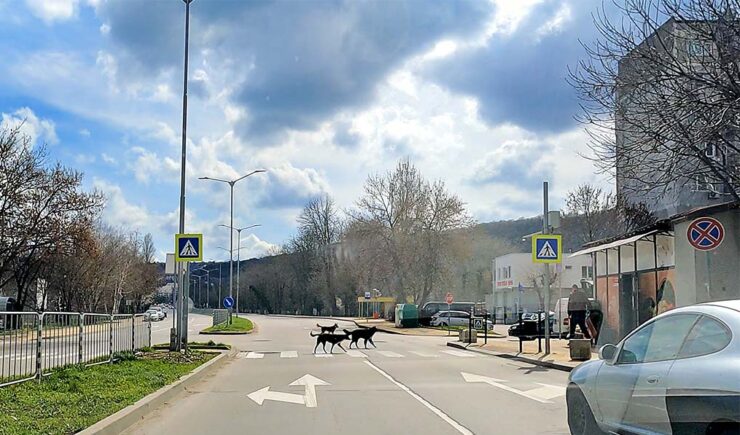
There are a great many stray animals on the streets. According to a report by the National Program for the Control of the Stray Dog Population, there are more than 35,000 stray dogs in Bulgaria.
12. Banking Services
It's very slow and doesn't measure up to the standards we're used to. Online banking has only just started to catch on here, and the options are still very limited. And an ATM can be out of service for a week, and that's considered normal.


13. High cost of car ownership
Car insurance starts at 130 euros. The annual vehicle tax can be either 25 or 130 euros. The annual vehicle inspection costs between 20 and 30 euros. But despite this, there are more and more cars on the roads.

14. Strict tax laws
Bulgaria ranks 97th in the Doing Business report's "Quality of Taxation" category. You can see the rates for Bulgaria's main taxes in the image.

15. Lack of parking spaces for cars
This shortage is particularly acute in large cities and in city centers.

16. Lack of Preferential Treatment for Small Businesses
Small businesses are subject to the same taxes and operating conditions as mega-corporations. The only difference is that there is a threshold for becoming subject to VAT based on 12-month revenue—100,000 levs. That’s about 50,000 euros.
17. Low level of digitization
You only have to look at the lines at the ticket counters. It’s not possible to pay for many services online with a credit card. There are very few payment terminals and ATMs that accept cash. But there has been slow progress in this area.

18. Features of Apartment Layouts
Many people probably know that bathrooms are usually combined. But not everyone knows that shower stalls are rare in Bulgarian apartments, and bathtubs are even harder to find. In a typical Bulgarian apartment, the shower consists of a showerhead with a hose and a drain in the floor—the so-called “Italian shower.” This is a shower area without a shower pan or the usual shower enclosure. Occasionally, you’ll find apartments with shower enclosures, but this is the exception rather than the rule. This tends to happen when a foreign developer is involved or when the construction of such complexes is designed from the outset to cater to foreigners.

19. Long wait time for citizenship through naturalization
One of the longest waiting periods for obtaining citizenship through naturalization. For example, in England, you must have lived there for at least five years to apply for citizenship. In Germany, you must have lived there for eight years to obtain citizenship, though under the new law, this period is reduced to five years. In Denmark, you must have lived there continuously for nine years before you can apply for citizenship. In Bulgaria, however, you can only apply for citizenship by naturalization after living there for 10 years while holding certain statuses specified by law. It’s also important to keep in mind that the application review process can take several years. Therefore, in reality, the process of obtaining citizenship can take more than 12 years.
I should note that this list includes only the downsides that were confirmed by our friends—immigrants. We conducted a mini-survey among them. Afterward, we included only the downsides that they mentioned.
Conclusion. Who is Bulgaria best suited for?
Although Bulgaria is considered an inexpensive country, paradoxically, these are people who are financially secure; they have a stable income that is not tied to their place of residence. These include retirees, owners of profitable businesses that can operate independently, and IT professionals who work remotely. An additional reason to move would be having enough money to purchase a home in the new country. In all other cases, we recommend thinking carefully before making such an important, life-changing decision.
If I haven't mentioned any downsides to living in Bulgaria, please mention them in the comments.
By clicking on this link, you'll learn about all the benefits of living in Bulgaria.
Video version of the article:



 Русский
  English
  Български
  Deutsch
  Română
  Українська
  Polski